

 Bibliografia Videoludica |

Benvenuto Visitatore(Log In|Registrati)
  |
 28 Jul 2006, 22:33
Messaggio
#26
|
|
  Gruppo: OldGamer Messaggi: 1.092 Iscritto il: 14 February 06 Da: Piacenza Utente Nr.: 2.051 busy librarian BGE DOTT Playing Batman: Arkham Asylum SO WinVista OGI Supporter  |
E ora attenzione a questo libro:
CITAZIONE Playstation Nation: Protect Your Child from Video Game Addiction by Olivia Bruner and Kurt Bruner  Are my kids spending too much time playing video games? Why don't my kids want to do anything else? Is it risky to let my adolescent play online games? How do I get my kids to turn off their game box and enjoy real life? Olivia Bruner was one of the millions of parents asking these questions. When she saw video games overtaking her young sons' lives, she decided to learn the facts behind addiction. What she found was shocking: that most games are designed to be highly addictive-triggering physiological reactions in the brain similar to those associated with substance abuse-and that one out of five kids becomes addicted to computer and video games. And while many parents screen the content of games to protect their children from violent and sexual themes, few understand the forces causing their children to become hooked on "the digital drug." Presenting the growing research and stories of former video game addicts, Olivia and Kurt Bruner arm parents with the facts they need and concrete steps to protect our children from this very real epidemic. PLAYSTATION NATION is a must-read for all parents. (da http://www.twbookmark.com/books/9/1931722749/index.html) I "geni" che hanno scritto il libro hanno pure un loro sito per i genitori che vogliano disintossicare i figli dai videogiochi: VideoGameTrouble.Org --------------------  |
 |
 
|


|
5 Aug 2006, 23:16
Messaggio
#27
|
|
|
Gruppo: OldGamer Messaggi: 1.092 Iscritto il: 14 February 06 Da: Piacenza Utente Nr.: 2.051 busy librarian BGE DOTT Playing Batman: Arkham Asylum SO WinVista OGI Supporter |
 La scheda della casa editrice: CITAZIONE What Every Parent Needs to Know About Video Games: A Gamer Explores the Good, Bad, and Ugly of the Virtual World Richard Abanes What Every Parent Needs to Know About Video Games Suggested Retail: $9.99 ISBN13: 978-0-7369-1740-7 ISBN10: 0-7369-1740-3 Size: 5 1/4 x 8 Binding: Trade Release Date: August 01, 2006 Case Lot Quantity: 80 With sales over $30 billion per year—approaching Hollywood’s annual box–office take—video and computer games are now squarely in the mainstream of entertainment. Author/journalist Richard Abanes—an experienced gamer himself—offers this concise survey particularly to parents and other concerned adults. He discusses subjects like * positives and negatives of game–playing and game content * the rating system—its benefits and flaws * family–friendly games, those that aren’t—and recommendations * terminology and genres, such as sports, role-playing, shooter * political/cultural issues The author’s unsensational approach will prepare readers to make better decisions—not just about what is shown in games, but how it’s shown... and what overall message is being delivered. Note: includes candid discussion of game content. Abanes, Richard A nationally recognized authority on popular culture and religion, Richard Abanes has spent nearly 15 years in the field as an author and journalist. In 1997 he received not only The Myers Center Award for the Study of Human Rights in North America for his “outstanding work on intolerance in North America,” but also the Evangelical Press Association’s “Higher Goals in Christian Journalism Award.” Among his dozen–plus books are Rick Warren and the Purpose That Drives Him; and the bestselling The Truth Behind the Da Vinci Code. Nella pagina il link al pdf con l'indice ed al sito dell'autore: www.abanes.com (attualmente non disponibile). -------------------- |
|
|
|
|
8 Aug 2006, 14:17
Messaggio
#28
|
|
|
Gruppo: OldGamer Messaggi: 1.092 Iscritto il: 14 February 06 Da: Piacenza Utente Nr.: 2.051 busy librarian BGE DOTT Playing Batman: Arkham Asylum SO WinVista OGI Supporter |
 Ecco la scheda (direttamente dalla casa editrice) di un libro sull'economia reale dei mondi virtuali (ovvero come fare - e perdere - soldi all'interno dei MMORPG): CITAZIONE Play Money
Or, How I Quit My Day Job and Made Millions Trading Virtual Loot by Julian Dibbell Jul 10, 2006 Hardcover US $24.00 CAN $33.95 UK £13.99 0465015352 Published by Basic Books Description Play Money explores a remarkable new phenomenon that's just beginning to enter public consciousness: MMPORGs, or Massively MultiPlayer Online Role-Playing Games, in which hundreds of thousands of players operate fantasy characters in virtual environments the size of continents. With city-sized populations of nearly full-time players, these games generate their own cultures, governments, and social systems and, inevitably, their own economies, which spill over into the real world. The desire for virtual goods--magic swords, enchanted breastplates, and special, hard-to-get elixirs--has spawned a cottage industry of "virtual loot farmers": People who play the games just to obtain fantasy goods that they can sell in the real world. The best loot farmers can make between six figures a year and six figures a month. Play Money is an extended walk on the weird side: a vivid snapshot of a subculture whose denizens were once the stuff of mere sociological spectacle but now--with computer gaming poised to eclipse all other entertainments in dollar volume, and with the lines between play and work, virtual and real increasingly blurred--look more and more like the future. -------------------- |
|
|
|
|
10 Aug 2006, 22:08
Messaggio
#29
|
|
|
Gruppo: OldGamer Messaggi: 1.092 Iscritto il: 14 February 06 Da: Piacenza Utente Nr.: 2.051 busy librarian BGE DOTT Playing Batman: Arkham Asylum SO WinVista OGI Supporter |
 Segnalo il libro: Understanding Digital Games prodotto dal progetto Digiplay Initiative. Ecco la scheda relativa al libro disponibile sul sito: CITAZIONE Understanding Digital Games
Jason Rutter & Jo Bryce (eds) Sage ISBN: 1-4129-0034-4 ( Paperback) £19.99 ISBN: 1-4129-0033-6 (Cloth) £60.00 272 pages April 2006 The study of Digital Games is a lively area of research and theorising which draws upon perspectives from a range of disciplines including sociology, psychology, media and film studies, economics and business, gender studies and computer science. “Understanding Digital Games” brings them all together to offer a unique survey in this emerging field. Detailing both theoretical and empirical approaches the book is divided into three parts, looking in turn at: History and Production, Theories and Approach and Key Debates. Each chapter looks at the key scholars, analytical tools and themes and reviews a broad range of literature in order to demonstrate their relevance to the study of digital games. Illustrated with many examples all chapters include: * Breakout boxes defining key terms * A chapter- specific bibliography * A list of useful web sites Potential limitations and problems associated with particular theoretical or methodological approaches are considered. The collection’s emphasis is on providing a single comprehensive text for students and other readers new to the study of digital games. The text is organised so the each chapter can be read individually or sequentially on order to build a complete overview of the filed. This book will be essential reading for all students of digital media. CONTENTS An Introduction to Understanding Digital Games Jo Bryce and Jason Rutter (This sample chapter is available free online) PART ONE: HISTORY AND PRODUCTION A History of Digital Games John Kirriemuir The Business of Making Digital Games Aphra Kerr Economics of Digital Games Alberto Alvisi A Player-centred Approach to Digital Game Design Jonathan Sykes PART TWO: THEORIES AND APPROACHES Literary Theory and Digital Games Julian Kücklich Cultural Studies and Digital Games Garry Crawford and Jason Rutter Film Studies and Digital Games Geoff King and Tanya Krzywinska Digital Games as New Media Seth Giddings and Helen Kennedy Community, Identity and Digital Games Martin Hand and Karenza Moore PART THREE: KEY DEBATES Digital Games and Gender Jo Bryce and Jason Rutter Digital Games and the Violence Debate Jo Bryce and Jason Rutter Digital Games in Education Timothy Dumbleton and John Kirriemuir -------------------- |
|
|
|
|
10 Aug 2006, 22:16
Messaggio
#30
|
|
|
Gruppo: OldGamer Messaggi: 1.092 Iscritto il: 14 February 06 Da: Piacenza Utente Nr.: 2.051 busy librarian BGE DOTT Playing Batman: Arkham Asylum SO WinVista OGI Supporter |
 Segnalo il libro di Castronova (un guru defli on-line gaming studies): Synthetic Worlds. La scheda che segue è riportata da Bol: CITAZIONE Synthetic Worlds
The Business and Culture of Online Gamers Edward Castronova 344 pagine | 236 x 181 mm. | University of Chicago Press | USA | 2005 | $ 29.00 | ISBN: 0226096262 Edizione: Hardback Contenuto: Offers a look at the online game industry and its implications. The book gives us a look into the lives of the gamers, outlining what they do in their synthetic worlds and why; describes the economies inside these worlds, showing how they might affect real world financial systems; and explores the long-term social consequences of online games. Contenuto esteso: From EverQuest to World of Warcraft, online games have evolved from the exclusive domain of computer geeks into an extraordinarily lucrative staple of the entertainment industry. People of all ages and from all walks of life now spend thousands of hours - and dollars - partaking in this popular new brand of escapism. But the line between fantasy and reality is starting to blur. Players have created virtual societies with governments and economies of their own whose currencies now trade against the dollar on eBay at rates higher than the yen. And the players who inhabit these synthetic worlds are starting to spend more time online than at their day jobs. In "Synthetic Worlds", Edward Castronova offers the first comprehensive look at the online game industry, exploring its implications for business and culture alike. He starts with the players, giving us a revealing look into the everyday lives of the gamers - outlining what they do in their synthetic worlds and why. He then describes the economies inside these worlds to show how they might dramatically affect real world financial systems, from potential disruptions of markets to new business horizons. Ultimately, he explores the long-term social consequences of online games: If players can inhabit worlds that are more alluring and gratifying than reality, then how can the real world ever compete? Will a day ever come when we spend more time in these synthetic worlds than in our own? Or even more startling, will a day ever come when such questions no longer sound alarmist but instead seem obsolete? With more than five million active players worldwide - and with Microsoft and Sony pouring hundreds of millions of dollars into video game development - online games have become too big to ignore. "Synthetic Worlds" spearheads our efforts to come to terms with this virtual reality and its concrete effects. Altri dati: Argomento:Internet games - Social aspects.,Internet games - Economic aspects. Altri contenuti: 4 tables, 1line drawing Livello di lettura: general -------------------- |
|
|
|
|
10 Aug 2006, 22:24
Messaggio
#31
|
|
|
Gruppo: OldGamer Messaggi: 1.092 Iscritto il: 14 February 06 Da: Piacenza Utente Nr.: 2.051 busy librarian BGE DOTT Playing Batman: Arkham Asylum SO WinVista OGI Supporter |
Ho trovato sul sito Digiplay Initiative (già citato sopra per un volume) un'ampia bibliografia sui videogiochi:
CITAZIONE The Digiplay bibliography is one of the largest digital games related resources of its type. Multidisciplinary in nature it contains hundreds of references to published and web-based literature. La controllerò per bene, anche confrontandola con quelle già prodotte qui (e comunque propone solo testi in lingua inglese, e ad esempio il "nostro" Bittanti non c'è, ma sicuramente è uno strumento da tenere in considerazione. -------------------- |
|
|
|
|
12 Aug 2006, 16:29
Messaggio
#32
|
|
|
Gruppo: OldGamer Messaggi: 1.092 Iscritto il: 14 February 06 Da: Piacenza Utente Nr.: 2.051 busy librarian BGE DOTT Playing Batman: Arkham Asylum SO WinVista OGI Supporter |
 Riguarda solo incidentalmente i videogiochi, ma comunque non mi pare di scarso interesse. La scheda è ripresa dalla casa editrice. CITAZIONE Carlo Gubitosa prefazione di Paolo Attivissimo
Elogio della pirateria Dal Corsaro Nero agli hacker dieci storie di ribellioni creative Chi sono i pirati? Gli "eroi" come il Corsaro Nero per cui facevamo il tifo da piccoli, oppure soggetti che -ci dicono da grandi- sono sovversivi perché condividono musica e software? Questo libro racconta dieci storie di "eretici postmoderni" che si oppongono al dio-profitto: dai pirati dell'etere agli hacker americani da cui è nato l'open source, dai pirati della salute contro i brevetti sui farmaci ai writer urbani: dieci pratiche per salvare la nostra cultura da una precoce morte celebrale. Carlo Gubitosa, giornalista, è autore di Telematica per la pace, L'informazione alternativa, Genova nome per nomee Viaggio in Cecenia. Collabora con Peacelink, associazione di volontariato dell'informazione. Paolo Attivissimo ha scritto Da Windows a Linux e L'Acchiappavirus. isbn: 8889385375 132 pagine settembre 2005 9.00 euro -------------------- |
|
|
|
|
21 Aug 2006, 11:51
Messaggio
#33
|
|
|
Gruppo: OldGamer Messaggi: 1.092 Iscritto il: 14 February 06 Da: Piacenza Utente Nr.: 2.051 busy librarian BGE DOTT Playing Batman: Arkham Asylum SO WinVista OGI Supporter |
 MASTERS OF DOOM di David Kushner (Multiplayer.it, € 15) Disponibile a partire dallo scorso settembre la traduzione in italiano di Masters of Doom di David Kushner grazie alle edizioni di Multiplayer.it (il libro può essere acquistato sia su Multiplayer.it <www.multiplayer.it> dove sono disponibili pure gratuitamente il prologo ed il primo capitolo, sia su Internet Bookshop <www.ibs.it>; non è disponibile invece su Bol <www.bol.it>). Il libro è un'indagine sul rapporto tra John Romero e John Carmack, sul loro sodalizio che ha portato alla fondazione della id Software e successivamente alla loro divisione, sui giochi che i due hanno creato e sul loro impatto sul mondo videoludico e sulla società nel suo complesso. Il libro arriva cronologicamente a coprire, con l'epilogo aggiunto alla versione paperback in inglese, il 2003 e, con l'epilogo aggiunto all'edizione italiana da Fabio Cristi (curatore di quest'edizione e della traduzione) supervisionato da Kushner, il 2005. L'inizio del libro invece risale al 1979 mentre Kushner mostra un Romero undicenne che va a giocare con i videogiochi nonostante i rimproveri e le sanzioni dei genitori. Un Romero con problemi familiari (il padre naturale assente, un patrigno eccessivamente severo, l'impossibilità di esprimere i propri interessi) analoghi al più giovane (di tre anni) Carmack che dovette passare un anno al riformatorio per aver tentato di sottrarre degli Apple II dal magazzino di una scuola. John Carmack Il loro incontro avvenne a Shreveport (Louisiana) presso la Softdisk, dove entrambi programmavano giochi da allegare alla pubblicazione della ditta. Mentre erano ancora dipendenti della ditta, pubblicarono per Apogee il loro primo successo: Commander Keen. Il gioco va ricordato anche per il fatto di essere stato uno dei primi veri successi di un nuovo metodo di distribuzione del software: lo “shareware”. Ben presto abbandonarono Shreveport e la Softdisk per programmare nuovi giochi trasferendosi a Mesquite (Texas, vicina a Dallas) e proponendo con Wolfenstein 3D una variazione di un titolo già esistente ottenuta immergendo il giocatore in un ancora rudimentale soggettività tridimensionale. Nel 1993, un anno dopo il rilascio di Wolf3D, la id propose Doom e ovviamente il mondo (dei videogiochi e non solo) non fu più lo stesso. Come recita il sottotitolo del libro di Kushner: “come due ragazzi hanno creato un impero e trasformato la cultura pop”. John Romero Nel libro Kushner racconta dettagliatamente la genesi di Doom, i rapporti personali contemporaneamente di ammirazione e di conflitto dei due John e tra loro ed il resto dei programmatori della id, come il successo di Doom mise di fronte sia i due sia il gruppo alla mancanza di obiettivi comuni e di sinergie. Viene infatti sottolineato come Carmack sia un programmatore quasi maniacale, interessato unicamente al proprio lavoro e contemporaneamente un convinto sostenitore della filosofia “open source”, mentre Romero sia più interessato contemporaneamente al lato commerciale e di relazioni pubbliche dell'attività di produzione dei videogiochi. Questa diversità di vedute ha portato l'uno a mantenere la id una società piccola ed indipendente, ma anche a limitare il proprio operato sostanzialmente ad un solo genere, anzi a due soli titoli: Doom e Quake, l'altro a fondare una società come la Ion Storm che è collassata su se stessa per essere cresciuta troppo e troppo in fretta senza dare i risultati sperati e dove i giochi più interessanti (Deus Ex) sono arrivati da elementi esterni per cui la società fungeva quasi da produttore. Nondimeno la coalizione dei due, i giochi che hanno sviluppato assieme, hanno marcato ineludibilmente la società in cui viviamo. Prima di Carmack&Romero non molti avrebbero scommesso sulla diffusione capillare dei Pc tanto da arrischiarsi a sviluppare giochi ad essi dedicati. Prima di Carmack&Romero la Rete non era vista come un luogo non solo possibile ma privilegiato su cui giocare. Prima di Carmack&Romero non molti avrebbero pensato che fosse possibile fare una fortuna producendo schede grafiche per Pc. Prima di Carmack&Romero non si sarebbe potuto pensare di trasformare l'attività videoludica in competizione sportiva con tanto di sponsor e leghe nazionali e internazionali. E d'altra parte senza Carmack&Romero la strage della Columbine High School non sarebbe stata additata principalmente come responsabilità ai videogiochi. Ma Kushner non vuole dal suo libro giungere a conclusioni moralisticheggianti. Non ci vuole convincere che uno dei due John sia stato buono e l'altro cattivo. Non ci vuole convincere di quale dei loro due modelli di business sia il migliore. Forse dalla conclusione possiamo solo trarre alcune riflessioni. La prima è che entrambi i due John sono alla “frutta” videoludicamente parlando. Romero, dopo il collasso di Ion Storm si era dato alla produzione di videogiochi per palmari e cellulari con una nuova società da lui fondata, la Monkeystone Games, per poi passare alla Midway dove ha collaborato a Gauntlet: Seven Sorrow ed a Area 51, ed infine ha recentemente inaugurato una nuova società, la Slipgate Ironworks che attualmente sta cercando personale (http://slipg8.com/) e che si rumoreggia essere impegnata nello sviluppo di un Massive Multiplayer Online Game. Se la carriera di Romero è stata dispersiva (anche considerando il flop di quello che doveva essere il suo capolavoro: Daikatana), quella di Carmack è stata forse eccessivamente monomaniaca: dedicata unicamente a migliorare i motori 3D per gli sparatutto in soggettiva, ha finito per produrre un Doom3 ampiamente inferiore alle aspettative non tanto per il comportamento della motore o per la spettacolarità della grafica, ma sostanzialmente perché sembra privo di qualsiasi idea originale, idee che pure altri giochi – fin dai tempi di Duke Nukem 3D del vecchio partner di Carmack&Romero, Apogee/3D Realms – hanno dimostrato di saper implementare. Carmack sembra oggi seguire (cfr. il suo blog: <http://www.armadilloaerospace.com/n.x/johnc/Recent%20Updates>) le orme del vecchio compagno interessandosi ai giochi per cellulari e console e recentemente è stato pubblicato il primo titolo id per cellulari: DoomRPG. La seconda riflessione è che comunque il mondo videoludico è in continuo e frenetico movimento - già con questa recensione abbiamo potuto aggiungere ulteriori elementi alla vicenda narrata nel libro - e che quindi nuovi, inediti scenari potrebbero aprirsi e portare nuovi elementi a questa storia. -------------------- |
|
|
|
|
29 Aug 2006, 16:01
Messaggio
#34
|
|
|
Gruppo: OldGamer Messaggi: 1.092 Iscritto il: 14 February 06 Da: Piacenza Utente Nr.: 2.051 busy librarian BGE DOTT Playing Batman: Arkham Asylum SO WinVista OGI Supporter |
CITAZIONE   Barney Oram and James Newman Teaching Videogames BFI Teaching Film and Media Studies Publication Date: September 2006 Subjects: Cinema & Performance Arts; Television and Radio; Electronic Media Rights: North and South America, Asia (omit India) 88 pages, 7 x 9-3/4 inches, Illustrated DESCRIPTION This accessible guide provides a stimulating introduction to teaching this new and exciting topic, offering practical and helpful advice on classroom approaches and clear reference to critical and theoretical writing. It links the study of video games to the key concepts, includes detailed case studies of a range of video games, and summarizes recent educational research. Contents include: * Introduction: assessment contexts and schemes of work * Ways to approach the study of video games * Forms and conventions * Audiences * Institutions * Analyzing video games * Case studies: Viewtiful Joe; GTA San Andreas; Halo 2; Buffy: Chaos Bleeds ABOUT THE AUTHORS Barney Oram is a lecturer at Long Road Sixth Form College, Cambridge. He is an Assistant Examiner of A level Media Studies for one of the English awarding bodies. James Newman is Senior Lecturer in Media Communications and Cultural Studies at Bath Spa University. -------------------- |
|
|
|
|
29 Aug 2006, 21:40
Messaggio
#35
|
|
|
Gruppo: OldGamer Messaggi: 1.092 Iscritto il: 14 February 06 Da: Piacenza Utente Nr.: 2.051 busy librarian BGE DOTT Playing Batman: Arkham Asylum SO WinVista OGI Supporter |
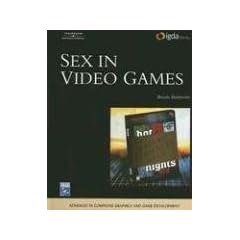 Scheda da Amzon.com: CITAZIONE Sex in Video Games (Paperback)
by Brenda Brathwaite List Price: $39.95 Editorial Reviews Book Description Sex in games has been around almost as long as the medium itself. With the release of games like Playboy: The Mansion, Leisure Suit Larry, and The Singles, sexual content gained a firm foothold and for the first time, ventured into the mainstream. Even casual games like the Sims started to rev things up a bit, and in on-line games, tales of ?cybering? have become common place. Seeking to understand this emerging trend, developers, publishers, retailers and consumers are asking themselves: when is sex appropriate in a game? how far is too far? what will it mean for the product? for its distribution? for my company? for me? do sexual content games sell better? are they generally profitable? So far, there are no definitive answers to these questions. Sex in Video Games seeks to provide insight into this issue and provide guidelines and answers by studying the history of sexual content in games and the games industry, as well as the public and political reaction to it. In addition, the book considers ethical issues, parental and retailer responsibility, and explores the industry attempts at self-regulation and the growing issue of censorship. About the Author Brenda Brathwaite, (Savannah, GA) has an extensive video gaming career that spans nearly 25 years. Her contributions to the field include directing game design teams, designing and writing several top selling games such as Playboy: The Mansion, Dungeons & Dragons Heroes, and Wizardy 8, which has received many accolades including Computer Games Magazine, 2001 RPG Game of the Year. Brathwaite has been a regular contributor to Power Play Magazine, CGDC Today Newspaper, Computer Games Entertainment Magazine, and Strategy Plus Magazine. Product Details * Paperback: 336 pages * Publisher: Charles River Media; 1 edition (September 15, 2006) * Language: English * ISBN: 1584504595 -------------------- |
|
|
|
|
29 Aug 2006, 21:52
Messaggio
#36
|
|
|
Gruppo: OldGamer Messaggi: 1.092 Iscritto il: 14 February 06 Da: Piacenza Utente Nr.: 2.051 busy librarian BGE DOTT Playing Batman: Arkham Asylum SO WinVista OGI Supporter |
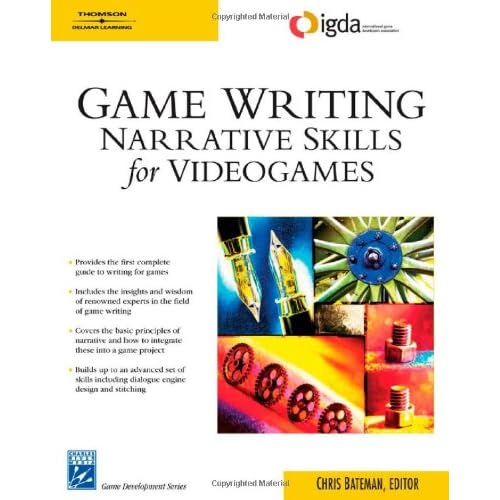 Dal sito della casa editrice: CITAZIONE Game Writing: Narrative Skills For Videogames Chris Bateman As computer games become more and more like Hollywood productions, the need for good story lines increases. Research shows that stories are highly valued by game players, so today’s studios and developers need good writers. Creating narrative -- a traditionally static form -- for games is a major challenge. Games are at their heart dynamic, interactive systems, so they don’t follow the guidelines and rules of film or T.V. writing. Game Writing: Narrative Skills for Videogames addresses these issues and is the first book written to demystify this emerging field. Through the insights and experiences of practicing game writers, the book captures a snapshot of the narrative skills employed in today’s game industry. This unique collection of practical articles provides the foundations to the craft of game writing. The articles, written by members of the International Game Developer’s (IGDA) Game Writers’ SIG, detail aspects of the process from the basics of narrative and non-linear narrative to writing comedy for games and creating compelling characters. Throughout the articles there is a strong emphasis on the skills developers and publishers will expect a game writer to have. The book is suitable for both beginners and experienced writers, and is a detailed guide to all the techniques of game writing. This book is an essential read for anyone wishing to get into this exciting field, particularly for new game writers wanting to hone their skills, and film and T.V. scriptwriters who want to learn how to transfer their skills to the games industry. Features * Provides the first complete guide to writing for games * Includes the insights and wisdom of renowned experts in the field of game writing * Provides examples from real games * Covers the basic principles of narrative and how to integrate these into a game project * Builds up to an advanced set of skills including dialogue engine design and “stitching” techniques * Created by members of the IGDA’s Game Writers’ Special Interest Group Contributors * Ernest Adams * Chris Bateman * Richard Boon * Richard Dansky * Mary DeMarle * Matt Entin * Stephen Jacobs * Ed Kuehnel * Tim Langdell * Rhianna Pratchett * Coray Seifert * James Swallow * Andrew S. Walsh Sub Editors * Neil Bundy * Sande Chen * Wendy Despain * Beth A. Dillon * Ahmad Saad * Ben Serviss AUTHOR BIO Chris Bateman is Managing Director of International Hobo, a specialist company in the field of market-oriented game design and narrative, and a noted game designer and writer. His games include Discworld Noir, Ghost Master and, Bratz: Rock Angels. He sits on the executive panel of the IGDA Game Writers’ Special Interest Group, and is also co-author of 21st Century Game Design. Indice Primo capitolo -------------------- |
|
|
|
|
13 Sep 2006, 11:12
Messaggio
#37
|
|
|
Gruppo: OldGamer Messaggi: 1.092 Iscritto il: 14 February 06 Da: Piacenza Utente Nr.: 2.051 busy librarian BGE DOTT Playing Batman: Arkham Asylum SO WinVista OGI Supporter |
Segnalo la mia recensione di:
Bernard Perron Silent Hill. Il motore del terrore (Costa & Nolan) Federica Grigoletto Videogiochi e cinema (Clueb) su Sentieri Selvaggi. Sul numero di ottobre del Mucchio Selvaggio dovrebbe uscire una rielaborazione del pezzo con una maggiore attenzione puntata sul libro della Grigoletto. -------------------- |
|
|
|
|
25 Sep 2006, 20:33
Messaggio
#38
|
|
|
Gruppo: OldGamer Messaggi: 1.092 Iscritto il: 14 February 06 Da: Piacenza Utente Nr.: 2.051 busy librarian BGE DOTT Playing Batman: Arkham Asylum SO WinVista OGI Supporter |
GAMESCENES
ART IN THE AGE OF VIDEOGAMES GameScenes. L'arte nell'era dei videogiochi (Johan & Levi, 2006) è il primo volume illustrato che esamina in modo specifico l'interazione/intersezione tra arte e videogiochi. Curato da Matteo Bittanti e Domenico Quaranta, il libro consiste in una serie di immagini di opere di oltre trenta artisti internazionali, accompagnata da saggi critici di esperti di arte e videogame. GameScenes. L'arte nell'era dei videogiochi si propone di raccontare attraverso immagini e testi l'estetica dell'arte videoludica, esaminare le modalita' attraverso le quali gli artisti hanno reinterpretato e adattato il videogame alle loro esigenze. Ogni capitolo si compone di una sequenza di screenshots di grandi dimensioni e in alta risoluzione, accompagnata da un testo che ha la funzione di illustrare i presupposti estetici, atmosfere, intenzioni espressive e il contesto dell'opera. Testo in inglese e italiano. Brossura, 454 pagine, 25 x 25 cm, 200+ illustrazioni in alta risoluzione. GameScenes sara' disponibile a partire da ottobre 2006. Dal sito ufficiale del volume: http://www.gamescenes.org/italian.html 
-------------------- |
|
|
|
|
4 Oct 2006, 11:06
Messaggio
#39
|
|
|
Gruppo: OldGamer Messaggi: 1.092 Iscritto il: 14 February 06 Da: Piacenza Utente Nr.: 2.051 busy librarian BGE DOTT Playing Batman: Arkham Asylum SO WinVista OGI Supporter |
Dal sito dell'editore la scheda di Second Life: The Official Guide:
CITAZIONE  Second Life: The Official Guide Michael Rymaszewski, Wagner James Au, Mark Wallace, Catherine Winters, Cory Ondrejka, Benjamin Batstone-Cunningham ISBN: 0-470-09608-X Paperback 312 pages December 2006 £22.99 / €30.50 Add to Cart This price is valid for Italy. Change location to view local pricing and availability. Description Second Life: The Official Guide is the perfect book for anyone interested in Linden Lab’s fascinating Second Life metaverse. It explores in detail every aspect of Second Life’s rich and multilayered virtual world, explains how it works, and offers a wealth of information and practical advice for all Second Life residents. The first part, “Getting a Second Life,” acquaints potential and new players with the Second Life world. It describes the metaverse’s geography as well as its society, explaining its written and unwritten rules. The second part, “Living a Second Life,” deals with the practical and economic aspects of Second Life: creating and customizing an avatar, building objects, scripting, and making money. The third part of the book, “Success in Second Life,” discusses ways to enjoy Second Life more. It includes profiles of successful Second Life residents, discusses fascinating in-world events, and examines how some are using Second Life for business, training, and other purposes. The book closes with a glossary as well as quick-reference and additional-resources appendices. The book's CD includes special animations, character templates, and textures created by Linden Lab exclusively for this book. The disc also guides new users through the installation and includes a code that grants a special object the first time they enter the metaverse. -------------------- |
|
|
|
|
13 Oct 2006, 13:55
Messaggio
#40
|
|
|
Gruppo: OldGamer Messaggi: 1.092 Iscritto il: 14 February 06 Da: Piacenza Utente Nr.: 2.051 busy librarian BGE DOTT Playing Batman: Arkham Asylum SO WinVista OGI Supporter |
Dal sito di Costa & Nolan:
 Ivan Fulco (a cura di) Virtual Geographic Reportage dai mondi dei videogiochi ISBN 10 88.7437.049.0 ISBN 13 978.88.7437.049.8 24 euro pp. 128 collana VIDEOLUDICA Dalla 4. di copertina: CITAZIONE Raccontare attraverso immagini ad alta definizione i paesaggi del videogioco, per indagare sui suoi metodi espressivi ma anche per raggiungere la nuova frontiera digitale dell’esplorazione: ecco lo spirito che ha guidato gli autori di questi “viaggi virtuali” attraverso un mondo a misura di pixel. Il concetto di National Geographic, sinonimo di realtà lontane e sconosciute, è portato al suo estremo: il virtuale. Nasce in questo modo il primo tentativo di fare un “documentario” del videogioco, un reportage su altre realtà, passate o future, da scoprire sui nostri monitor. Luoghi virtuali, mondi irreali dettagliatamente descritti e riprodotti… e l’ambiente in cui si svolge il gioco diventa protagonista grazie a designer capaci di rappresentarlo in maniera convincente attraverso immagini fotorealistiche.
I giochi analizzati sono: • Call of Duty • Doom 3 • Far Cry • Grand Theft Auto: San Andreas • Half-Life 2 • Manhunt • Oblivion • Painkiller • Silent Hill 2 -------------------- |
|
|
|
|
16 Oct 2006, 08:04
Messaggio
#41
|
|
  Gruppo: Founder Messaggi: 11.616 Iscritto il: 11 July 03 Da: Dor Firn-i-Guinar Utente Nr.: 27 The Political Scientist BGE The Secret of Monkey Island Playing Keyboard Music 5 SO Mac OS |
Per risolvere il quizzone relativo a ZZT mi sono imbattuto nel blog di Scott Miller e nella pagina a lui dedicata nel sito della 3D Realms.
Se scorrete in fondo, c'è la Scott's Library. -------------------- «L'anima del piacere è nella ricerca del piacere stesso».
|
|
|
|


|
16 Oct 2006, 18:41
Messaggio
#42
|
|
|
Gruppo: OldGamer Messaggi: 1.092 Iscritto il: 14 February 06 Da: Piacenza Utente Nr.: 2.051 busy librarian BGE DOTT Playing Batman: Arkham Asylum SO WinVista OGI Supporter |
Dal sito di Sage publications:
 CITAZIONE The Business and Culture of Digital Games
Gamework and Gameplay Authored by: Aphra Kerr National University of Ireland, Maynooth Description: This book explores the lifecycle of digital games. Drawing upon a broad range of media studies perspectives with aspects of sociology, social theory and economics, Aphra Kerr explores this all-pervasive, but under-theorised, aspect of our media environment. Written as an introductory text for media and game students this book aims present an overview of industry and scholary work on who makes games, where they get made, what kind of media and cultural form they are and who plays them and where. The Business and Culture of Digital Games looks at: - games as a new media form; - the design, development and marketing of games; - the use of games in public and private spaces. Combining a theoretical and empirical analysis of the production, content and consumption of computer games, this book will be of interest to many students of media, culture and communication. -------------------- |
|
|
|
|
1 Nov 2006, 11:55
Messaggio
#43
|
|
|
Gruppo: OldGamer Messaggi: 1.092 Iscritto il: 14 February 06 Da: Piacenza Utente Nr.: 2.051 busy librarian BGE DOTT Playing Batman: Arkham Asylum SO WinVista OGI Supporter |
Dal sito della casa editrice:
CITAZIONE Handbook of Computer Game Studies
Edited by Joost Raessens and Jeffrey Goldstein  Table of Contents and Sample Chapters New media students, teachers, and professionals have long needed a comprehensive scholarly treatment of digital games that deals with the history, design, reception, and aesthetics of games along with their social and cultural context. The Handbook of Computer Game Studies fills this need with a definitive look at the subject from a broad range of perspectives. Contributors come from cognitive science and artificial intelligence, developmental, social, and clinical psychology, history, film, theater, and literary studies, cultural studies, and philosophy as well as game design and development. The text includes both scholarly articles and journalism from such well-known voices as Douglas Rushkoff, Sherry Turkle, Henry Jenkins, Katie Salen, Eric Zimmerman, and others. Part I considers the "prehistory" of computer games (including slot machines and pinball machines), the development of computer games themselves, and the future of mobile gaming. The chapters in part II describe game development from the designer's point of view, including the design of play elements, an analysis of screenwriting, and game-based learning. Part III reviews empirical research on the psychological effects of computer games, and includes a discussion of the use of computer games in clinical and educational settings. Part IV considers the aesthetics of games in comparison to film and literature, and part V discusses the effect of computer games on cultural identity, including gender and ethnicity. Finally, part VI looks at the relation of computer games to social behavior, considering, among other matters, the inadequacy of laboratory experiments linking games and aggression and the different modes of participation in computer game culture. Joost Raessens is Associate Professor of New Media Studies in the Faculty of Arts at the University of Utrecht. Jeffrey Goldstein is Professor in the Department of Social and Organizational Psychology at the University of Utrecht. -------------------- |
|
|
|
|
4 Dec 2006, 09:25
Messaggio
#44
|
|
|
Gruppo: OldGamer Messaggi: 1.092 Iscritto il: 14 February 06 Da: Piacenza Utente Nr.: 2.051 busy librarian BGE DOTT Playing Batman: Arkham Asylum SO WinVista OGI Supporter |
Dalla home page:
CITAZIONE  Networking La rete come arte Il libro Il primo tentativo di ricostruzione della storia del networking artistico in Italia. Un'analisi sull'uso creativo e condiviso delle tecnologie, dal video al computer e sulla formazione di una comunità hacker italiana. Un riflessione sul ruolo dell'artista che si fa networker, ricollegandosi alle neoavanguardie degli anni Sessanta. Scritto da Tatiana Bazzichelli. Prefazione di Derrick de Kerckhove. Postfazione ed editing di Simonetta Fadda (Costa & Nolan, Milano, uscita novembre 2006). Fare network significa creare reti di relazione, per la condivisione di esperienze e idee in vista di una comunicazione e di una sperimentazione artistica in cui emittente e destinatario, artista e pubblico, agiscono sullo stesso piano. In Italia, grazie all'uso alternativo della rete Internet, nel corso di venti anni di sperimentazione si è formato un vasto network nazionale di persone che condividono obiettivi politici, culturali e artistici. Attivi in ambienti underground, questi progetti utilizzano media diversi (computer, video, televisione, radio, riviste) e si occupano di sperimentazione tecnologica, ovvero di hacktivism, secondo la terminologia in uso in Italia dove la componente politica è centrale. Il network italiano propone infatti una forma di informazione critica, diffusa attraverso progetti indipendenti e collettivi in cui l'idea della libertà di espressione è centrale. Allo stesso tempo, costruisce una riflessione sul nuovo ruolo dell'artista e autore che si fa networker, operatore di reti collettive, ricollegandosi alle pratiche artistiche delle Neoavanguardie degli anni Sessanta (prima fra tutte Fluxus), ma anche alla Mail Art, al Neoismo e a Luther Blissett. Un percorso che va dalle BBS, reti telematiche alternative diffuse in Italia dalla metà degli anni Ottanta ancor prima di Internet, fino agli Hackmeeting, alle Telestreet e alle pratiche di networking e net art di diversi artisti e attivisti, fra cui 0100101110101101.ORG, [epidemiC], Jaromil, Giacomo Verde, Giovanotti Mondani Meccanici, Correnti Magnetiche, Candida TV, Tommaso Tozzi, Federico Bucalossi, Massimo Contrasto, Mariano Equizzi, Pigreca, Molleindustria, Guerriglia Marketing, Sexyshock, Phag Off e molti altri. Lingua: italiano | Pagine: 336 | Prezzo: 21 €. Per richiedere il libro via posta scrivere a: Costa & Nolan. Il pagamento va effettuato con bollettino di CC postale allegato alla spedizione. Il 19 novembre, il libro Networking è disponibile in diverse copie in occasione dell'evento Critical Book and Wine a Milano. Networking è distribuito nelle librerie italiane a fine novembre 2006 e scaricabile in digitale da questo sito. -------------------- |
|
|
|
|
8 Dec 2006, 12:38
Messaggio
#45
|
|
|
Gruppo: OldGamer Messaggi: 1.092 Iscritto il: 14 February 06 Da: Piacenza Utente Nr.: 2.051 busy librarian BGE DOTT Playing Batman: Arkham Asylum SO WinVista OGI Supporter |
The Meaning and Culture of Grand Theft Auto:
CITAZIONE  The Meaning and Culture of Grand Theft Auto Critical Essays Edited by Nate Garrelts ISBN 0-7864-2822-8 notes, bibliographies, index 264pp. softcover 2006 $35 McFarland Description The immensely popular Grand Theft Auto game series has inspired a range of reactions among players and commentators, and a hot debate in the popular media. These essays from diverse theoretical perspectives expand the discussion by focusing scholarly analysis on the games, particularly Grand Theft Auto III (GTA3), Grand Theft Auto: Vice City (GTA:VC), and Grand Theft Auto: San Andreas (GTA:SA). Part One of the book discusses the fears, lawsuits, legislative proposals, and other public reactions to Grand Theft Auto, detailing the conflict between the developers of adult oriented games and various new forms of censorship. Depictions of race and violence, the pleasure of the carnivalistic gameplay, and the significance of sociopolitical satire in the series are all important elements in this controversy. It is argued that the general perception of digital changed fundamentally following the release of Grand Theft Auto III. The second section of the book approaches the games as they might be studied absent of the controversy. These essays study why and how players meaningfully play Grand Theft Auto games, reflecting on the elements of daily life that are represented in the games. They discuss the connection between game space and real space and the many ways that players mediate the symbols in a game with their minds, computers, and controllers. About the Author Nate Garrelts is an assistant professor of English at Saginaw Valley State University in University Center, Michigan. He is also the editor of Digital Gameplay (2005). CITAZIONE Table of Contents
An Introduction to Grand Theft Auto Studies 1 PART ONE: GRAND THEFT AUTO V. THE POWER-GO-ROUND .1 Spilling Hot Coffee? Grand Theft Auto as Contested Cultural Product 17 2. Political Interface: The Banning of GTA3 in Australia 35 3. Virtual Gangstas, Coming to a Suburban House Near You: Demonization, Commodification, and Policing Blackness 49 4. Play-Fighting: Understanding Violence in Grand Theft Auto III 70 5. The Subversive Carnival of Grand Theft Auto: San Andreas 88 6. Grand Theft Video: Running and Gunning for the U.S. Empire 104 7. From Stompin’ Mushrooms to Bustin’ Heads: Grand Theft Auto III as Paradigm Shift 115 PART TWO: A GRAND THEFT AUTO WAY OF LIFE 8. Everyday Play: Cruising for Leisure in San Andreas 127 9. Cruising in San Andreas: Ludic Space and Urban Aesthetics in Grand Theft Auto 143 10. Experiencing Place in Los Santos and Vice City 162 11. Positioning and Creating the Semiotic Self in Grand Theft Auto: Vice City and Grand Theft Auto: San Andreas 177 12. Against Embedded Agency: Subversion and Emergence in GTA3 199 13. Inviting Subversion: Metalepses and Tmesis in Rockstar Games’ Grand Theft Auto Series 210 14. Playing with Style: Negotiating Digital Game Studies 226 About the Contributors 245 Index 249 -------------------- |
|
|
|
|
11 Dec 2006, 22:18
Messaggio
#46
|
|
|
Gruppo: OldGamer Messaggi: 1.092 Iscritto il: 14 February 06 Da: Piacenza Utente Nr.: 2.051 busy librarian BGE DOTT Playing Batman: Arkham Asylum SO WinVista OGI Supporter |
 CITAZIONE Gaming and Libraries: Intersection of Services by Jenny Levine Gaming and Libraries: Intersection of Services by Jenny Levine “What if traditionally apathetic library users were instead motivated to get up early on a Saturday morning and plead for library staff members to open the doors?” author Jenny Levine asks in the introduction to "Gaming and Libraries: Intersection of Services," the 5th issue in volume 42 of Library Technology Reports. In this issue of LTR, numerous detailed examples of what libraries are already doing—including public, school, and academic libraries—provide Levine the springboard to illustrate how librarians can reap positive gains by proactively, creatively, and (above all) affordably integrating gaming into the services and programs already offered at your library. The case studies reveal that gaming programs often turn out to be among the most popular a library can offer. “I have yet to hear about a library of any type offering gaming that has received negative feedback from patrons,” Jenny notes. All the way to the conclusion of her report, “What Librarians Can Learn from Gamers,” Levine entertains as she informs. Along the way, you can: * Read the section “But They're Not Books!” to discover how things look when you turn the question “Why gaming?” on its head. * Focus on educational value as she shows how these “cognitive workouts” are proven to enhance the development of learning and literacy skills. * Get insights into the social value of gaming—an activity that cuts across age, socioeconomic groups, gender, and technical know-how—from “Meet the Gamers.” * Learn how other libraries, with creative planning and little money, have incorporated gaming services for a big return on investment. The appendix section of the report includes materials (librarian-created press releases, real examples of promotional fliers, and staff checklists for game-day events) that librarians can build upon to create a successful gaming program at any type of library—which can engage your community's youth and adult gaming populations. The issue covers video game consoles (e.g., MicroSoft's Xbox 360, Nintendo's GameCube, and Sony's PlayStation), computer-based games (e.g., Myst, The Sims, Civilization IV), and Web-based games (e.g., Bookworm and PopCap Games) as well as some of the common gaming-equipment setups/configurations in libraries. In addition, Levine briefly looks at the popular and rapidly growing virtual-reality online community Second Life and the library services now being offered there. About the Author Jenny Levine is the author of the popular blog The Shifted Librarian blog and she has contributed to the ALA TechSource blog. She is currently Internet Development Specialist and Strategy Guide for the American Library Association's Information Technology and Technical Systems and Publishing departments. She earned her MLIS from the University of Illinois Urbana-Champaign and was named one of Library Journal's 2003 “Movers & Shakers,” the publication's homage to “the people shaping the future of libraries.” Qui l'indice e un'anteprima in .pdf. -------------------- |
|
|
|
|
15 Dec 2006, 20:04
Messaggio
#47
|
|
|
Gruppo: OldGamer Messaggi: 1.092 Iscritto il: 14 February 06 Da: Piacenza Utente Nr.: 2.051 busy librarian BGE DOTT Playing Batman: Arkham Asylum SO WinVista OGI Supporter |
2 tesi su Unreal Tournament:
Localizzazioni CS Bibl. Ingegneria Modena Libro Moderno Monografia Descrizione *Programmazione di agenti intelligenti autonomi in ambiente unreal tournament. - 57 p. : ill. . ((Tesi di laurea - Università degli Studi di Modena e Reggio Emilia, sede di Modena, Facoltà di Ingegneria, Corso di laurea in Ingegneria informatica, Anno Accademico 2003-2004 Primo Autore Biagioni, Marco Autore secondario Zambonelli, Franco Localizzazioni CS Bibl. Ingegneria Modena Libro Moderno Monografia Descrizione *Programmazione e coordinamento di agenti software autonomi in ambiente unreal tournament. - 120 p. : ill. . ((Tesi di laurea - Università degli Studi di Modena e Reggio Emilia, sede di Modena, Facoltà di Ingegneria, Corso di laurea in Ingegneria informatica, Anno Accademico 2004-2005 Primo Autore Pelliciari, Alessandro Autore secondario Zambonelli, Franco -------------------- |
|
|
|
|
12 Jan 2007, 09:36
Messaggio
#48
|
|
|
Gruppo: OldGamer Messaggi: 1.092 Iscritto il: 14 February 06 Da: Piacenza Utente Nr.: 2.051 busy librarian BGE DOTT Playing Batman: Arkham Asylum SO WinVista OGI Supporter |
Szulborski, Dave. This Is Not A Game: A Guide to Alternate Reality Gaming. New Fiction Publishing, 2005.
 CITAZIONE Alternate Reality Gaming
Imagine a world of mystery and excitement, adventure and fantasy, waiting for you to explore. A world that reacts to your every move, with characters and companies that talk to you, send you messages, and even give you items to help you in your quest. A world so immersive that you can no longer tell where the reality ends and the fiction begins. Welcome to the world of Alternate Reality Gaming. Alternate Reality Gaming, sometimes also called Immersive Gaming, Viral Marketing, or Interactive Fiction, is a rapidly emerging genre of online gaming and is one of the first true art and entertainment forms that was developed from and exclusively for the Internet. Alternate Reality Games have been wildly successful when used for multimillion dollar marketing campaigns, such as the 2004 game I Love Bees, used by Microsoft to help launch the hugely anticipated X-Box video game Halo 2, and the game that started it all, the Beast, used to promote Steven Spielberg’s science fiction epic A.I.: Artificial Intelligence in 2001. Read more about Dave Szulborski's Alternate Reality Games >> Dave Szulborski has created multiple Alternate Reality Games, beginning with a series of games about a fictional musical group called the ChangeAgents. Dave's game Chasing The Wish in 2001 was one of the most successful and critically acclaimed independent ARGs of all time. One of Dave's latest Alternate Reality Game was Urban Hunt, a game about a reality TV series that went horribly wrong. Currently, Dave is working with professional game, media, and marketing developers on the highly-praised Art of the Heist promotion for Audi, a game which is setting new standards in real world interactions, story depth, and puzzle variety and quality. Click the link again to collapse this section of content. This Is Not A Game: A Guide to Alternate Reality Gaming by Dave Szulborski is the perfect introduction to the unique and exciting world of Alternate Reality Games. Written by the creator of five successful and critically acclaimed ARGs, This Is Not A Game features detailed sections on the theory and history of Alternate Reality Gaming, as well as a “How To Guide” for aspiring game creators. The book also includes Dave’s personal reflections on creating some of the most popular ARGs ever developed, and essays on gaming and cooperative writing by award winning authors Ben Mack and Joseph Matheny. Read What People are Saying about This Is Not A Game>> "Dave Szulborski is one of the brightest minds examining the new and exploding genre of Alternate Reality Games. He writes from the unique perspective as both a creator and critic. Spending a couple hours with him discussing the amazing new world of immersive fiction is like hanging simultaneously with Hunter Thompson and Mos Def." Steve Wax, Chelsea Pictures, NY, NY "Of all the articles, e-mail posts, etc. that I have read on the subject of Alternate Reality Gaming, this book has done the most to clue me in on the whole ARG phenomenon." - Jon Storvick Click the link again to collapse this section of content. Dave Szulborski has created, developed, or worked on some of the most successful and critically acclaimed Alternate Reality Games of all time, both amateur and professional, including Audi's Art of the Heist, Chasing The Wish and Urban Hunt, making him the most experienced ARG creator in the world. His book, This Is Not A Game: A Guide to Alternate Reality Gaming, is the first published work on Alternate Reality Games and the only ARG reference book written by an actual ARG creator and developer. Buy This Is Not A Game: A Guide to Alternate Reality Gaming here. -------------------- |
|
|
|
|
12 Jan 2007, 09:47
Messaggio
#49
|
|
|
Gruppo: OldGamer Messaggi: 1.092 Iscritto il: 14 February 06 Da: Piacenza Utente Nr.: 2.051 busy librarian BGE DOTT Playing Batman: Arkham Asylum SO WinVista OGI Supporter |
Dal sito della University of Minnesota Press:
 CITAZIONE Gaming
Essays on Algorithmic Culture Alexander R. Galloway $17.95 Paper ISBN: 0-8166-4851-4 ISBN-13: 978-0-8166-4851-1 $54.00 Cloth ISBN: 0-8166-4850-6 ISBN-13: 978-0-8166-4850-4 A groundbreaking examination of the rise of video games. Video games have been a central feature of the cultural landscape for over twenty years and now rival older media like movies, television, and music in popularity and cultural influence. Yet there have been relatively few attempts to understand the video game as an independent medium. Most such efforts focus on the earliest generation of text-based adventures (Zork, for example) and have little to say about such visually and conceptually sophisticated games as Final Fantasy X, Shenmue, Grand Theft Auto, Halo, and The Sims, in which players inhabit elaborately detailed worlds and manipulate digital avatars with a vast—and in some cases, almost unlimited—array of actions and choices. In Gaming, Alexander Galloway instead considers the video game as a distinct cultural form that demands a new and unique interpretive framework. Drawing on a wide range of disciplines, particularly critical theory and media studies, he analyzes video games as something to be played rather than as texts to be read, and traces in five concise chapters how the “algorithmic culture” created by video games intersects with theories of visuality, realism, allegory, and the avant-garde. If photographs are images and films are moving images, then, Galloway asserts, video games are best defined as actions. Using examples from more than fifty video games, Galloway constructs a classification system of action in video games, incorporating standard elements of gameplay as well as software crashes, network lags, and the use of cheats and game hacks. In subsequent chapters, he explores the overlap between the conventions of film and video games, the political and cultural implications of gaming practices, the visual environment of video games, and the status of games as an emerging cultural form. Together, these essays offer a new conception of gaming and, more broadly, of electronic culture as a whole, one that celebrates and does not lament the qualities of the digital age. Alexander R. Galloway is assistant professor of culture and communication at New York University and author of Protocol: How Control Exists after Decentralization. 168 pages | 39 halftones, 2 line art, 3 tables | 5 3⁄8 x 8 1⁄2 | 2006 Electronic Mediations Series, volume 18 TABLE OF CONTENTS Preface Acknowledgements 1. Gamic Action, Four Moments 2. Origins of the First-Person Shooter 3. Social Realism 4. Allegories of Control 5. Counter-Gaming Notes Index -------------------- |
|
|
|
|
16 Jan 2007, 17:31
Messaggio
#50
|
|
|
Gruppo: OldGamer Messaggi: 1.092 Iscritto il: 14 February 06 Da: Piacenza Utente Nr.: 2.051 busy librarian BGE DOTT Playing Batman: Arkham Asylum SO WinVista OGI Supporter |
Dal sito della casa editrice:
 CITAZIONE Gaming as Culture
Essays on Reality, Identity and Experience in Fantasy Games Edited by J. Patrick Williams, Sean Q. Hendricks and W. Keith Winkler ISBN 0-7864-2436-2 notes, bibliographies, index 232pp. softcover 2006 $35 Available for immediate shipment Description Since tabletop fantasy role-playing games emerged in the 1970s, fantasy gaming has made a unique contribution to popular culture and perceptions of social realities in America and around the world. This contribution is increasingly apparent as the gaming industry has diversified with the addition of collectible strategy games and other innovative products, as well as the recent advancements in videogame technology. This book presents the most current research in fantasy games and examines the cultural and constructionist dimensions of fantasy gaming as a leisure activity. Each chapter investigates some social or behavioral aspect of fantasy gaming and provides insight into the cultural, linguistic, sociological, and psychological impact of games on both the individual and society. Section I discusses the intersection of fantasy and real-world scenarios and how the construction of a fantasy world is dialectically related to the construction of a gamer’s social reality. Because the basic premise of fantasy gaming is the assumption of virtual identities, Section II looks at the relationship between gaming and various aspects of identity. The third and final section examines what the personal experiences of gamers can tell us about how humans experience reality. About the Author J. Patrick Williams is an Assistant Professor of Sociology at Arkansas State University. He is co-editor of The Players’ Realm: Studies on the Culture of Video Games and Gaming (2007). Sean Q. Hendricks is a lecturer and research consultant at the University of Georgia. W. Keith Winkler is currently working on an M.A. in Linguistics at the University of Georgia. He lives in Athens, Georgia. -------------------- |
|
|
|
|
1 utenti stanno leggendo questa discussione (1 visitatori e 0 utenti anonimi)
0 utenti:
| Versione Lo-Fi | Oggi è il: 2nd November 2026 - 14:41 |